






Paks Nuclear Plant: The Importance of Long-Term Infrastructure Planning
As the water level of the Danube River continues to drop and the operational life of the Paks Nuclear Power Plant is extended, experts emphasize the need to think in terms of decades. According to Sándor Baranya, an associate professor leading the Department of Water Engineering and Water Management at the Budapest University of Technology and Economics, current solutions must be evaluated with a long-term perspective in mind.
A Quick Fix for an Urgent Situation
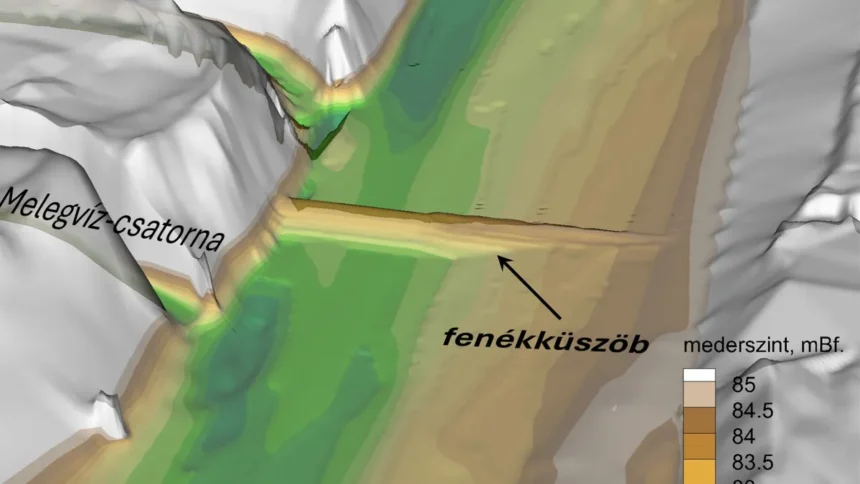
The construction of a new bottom sill at Paks is described as a rapid technical solution to a concrete energy supply emergency. This structure aims to ensure that the water intake for the plant’s cooling system remains functional despite the Danube’s falling water levels. However, Baranya points out that while this sill may provide a lasting solution for the plant’s cooling water supply, its long-term viability and sustainability need careful examination.
Looking Decades Ahead
With the extension of the Paks plant’s operational lifetime and the planning of the Paks II project, infrastructure decisions must consider a timeline spanning several decades. The continuous deepening of the Danube riverbed, which contributed to the current situation, is a critical factor. Future adjustments might be necessary especially if the cooling water pump intake pipes are placed deeper. Furthermore, other considerations like navigation on the river could eventually require a redesign of the sill or even a complete rethinking of the structure.



Expertise Built Over Years
The involvement of the Department of Water Engineering in this project builds upon its long-standing research and expert activities. For years, the department has studied the Danube’s flow, riverbed morphology, and the impacts of various river regulation interventions. This extensive modeling and measurement expertise allowed them to provide substantial professional support swiftly even within the project’s tight timeframe.
The department’s staff has worked on the design and impact assessment of numerous river regulation and water engineering projects. Their portfolio includes:



- The hydro-morphological impact study for the water level control structure at the mouth of the Mosoni-Duna
- Involvement in several river restoration initiatives
- Participation in European research projects aimed at developing innovative solutions
- Studies on riverbed erosion
- Research on sediment replacement along the Danube
- Collaboration with other academic institutions
The Core Message: Sustainable Planning is Key
The situation at Paks highlights a universal challenge: balancing immediate technical needs with sustainable long-term planning. Quick fixes are essential in emergencies but they must be part of a broader forward-looking strategy. For the future of Hungary’s nuclear energy and the health of the Danube River, thinking in terms of decades is not just advisable – it is imperative.
| Factor | Consideration |
|---|---|
| Water Level | Impact on cooling system |
| Riverbed Morphology | Long-term viability of infrastructure |
| Navigational Needs | Potential redesign of structures |
| Environmental Impact | Sustainability assessments |
| Technological Solutions | Innovative research projects |
| Future Planning | Forward-looking strategies |