








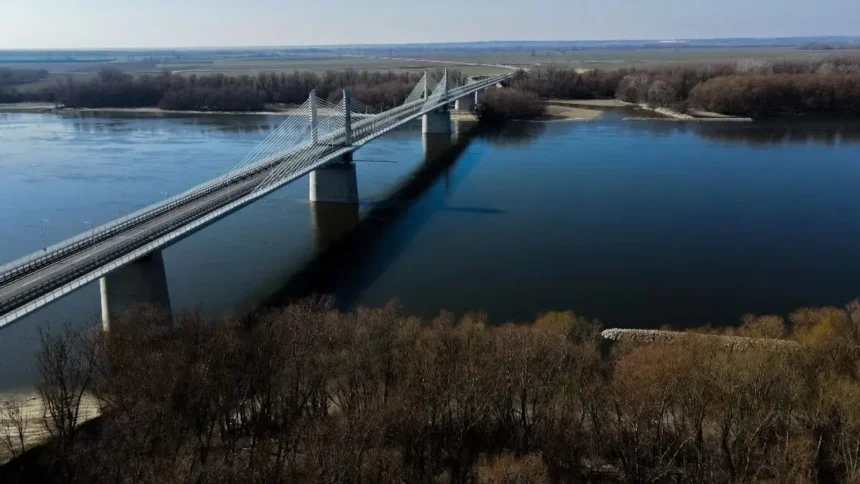
Recent heavy rains have brought a surge of water to the Tisza River. Officials are using this natural opportunity to address a serious problem: the long-term shortage of water across the Hungarian plains.
During the past two weeks, parts of the Tisza watershed saw over 150 millimeters of rain. The river rose quickly, creating a flood wave. Instead of letting all this water simply flow downstream, the government ordered the opening of sluice gates at three key locations. Water is now moving into dried-up side channels and irrigation systems without needing a single pump. Gravity is doing the work.
Water entered the Atkai-Holtág through the Atkai sluice. It went into the Gyálai-Holt-Tisza via the Alsó-Lúdvári sluice. Near Dóc, water flowed through the Percsorai sluice into the Levelényi irrigation system.
These actions show a clear strategy. When the river’s level peaks, the gates will be closed. This keeps the water in the landscape, trapped in these replenished channels and reservoirs, instead of letting it drain back into the main river.

The goal is to hold every possible drop for the dry seasons ahead. Nationwide efforts are focused on closing sluices, filling canals and dead river channels, and raising water levels in storage reservoirs.
The early results are significant. Surface water reserves have already increased by 51 million cubic meters. That is a seventy percent larger gain compared to the same period last year. This work turns a challenge like flooding into a practical solution for future water security.



- Rainfall over 150 millimeters
- Opening of sluice gates
- Gravity-driven water movement
- Filling dried-up channels
- Closing gates at river peak levels
- Increased surface water reserves
| Measure | Current Value | Comparison to Last Year |
|---|---|---|
| Surface Water Reserves | 51 million cubic meters | 70% increase |